
Another (incredible) 3 storey atrium!
Chris Dale • July 21, 2023
Second to the kerb appeal of an imposing, beautifully designed symmetrical, house with feature stonework, behind a huge gate and a spacious gravelled forecourt...
Second to the kerb appeal of an imposing, beautifully designed symmetrical, house with feature stonework,
behind a huge gate and a spacious gravelled forecourt - has to be the first impression you get when you walk into an equally impressive house.
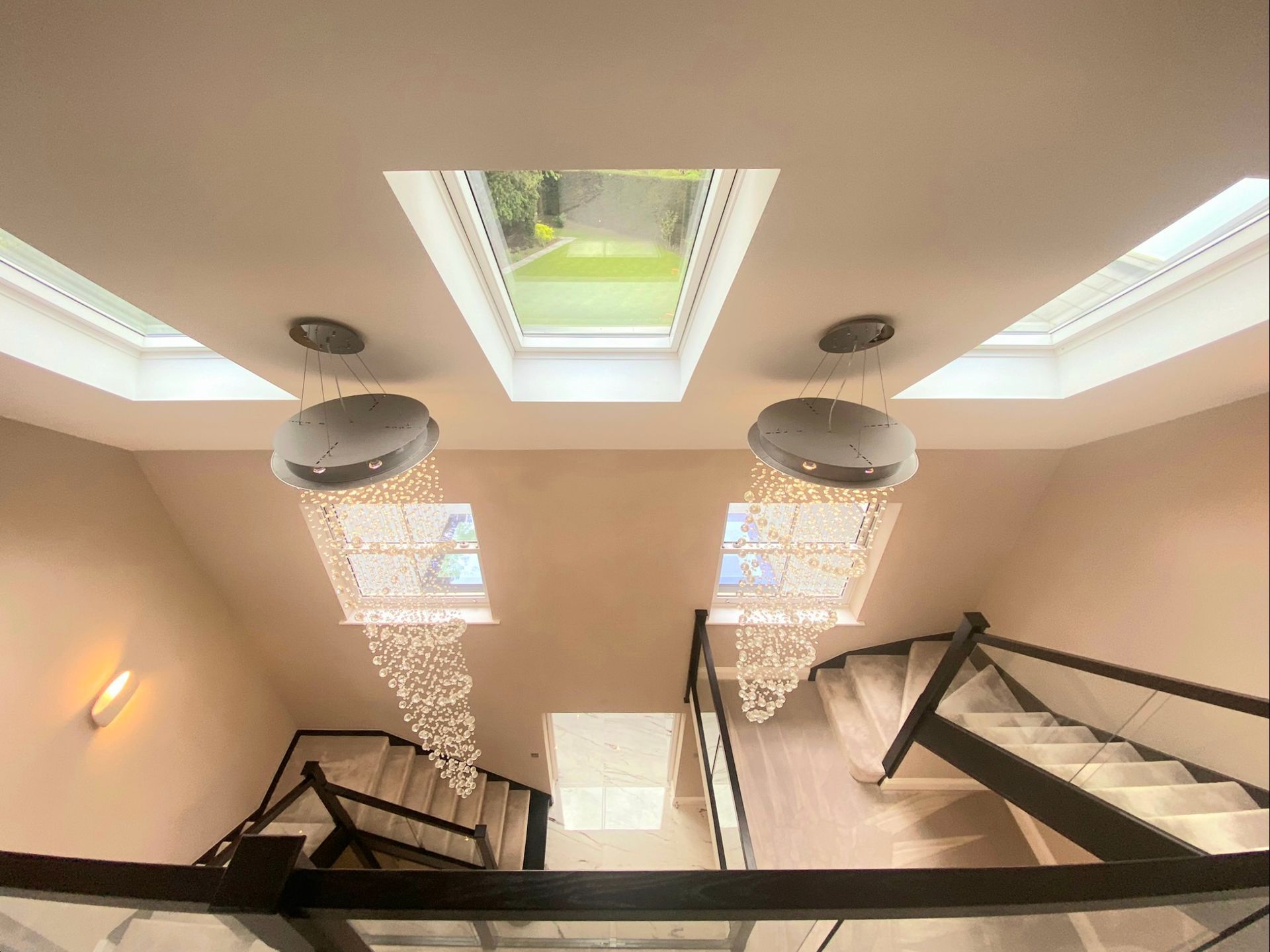
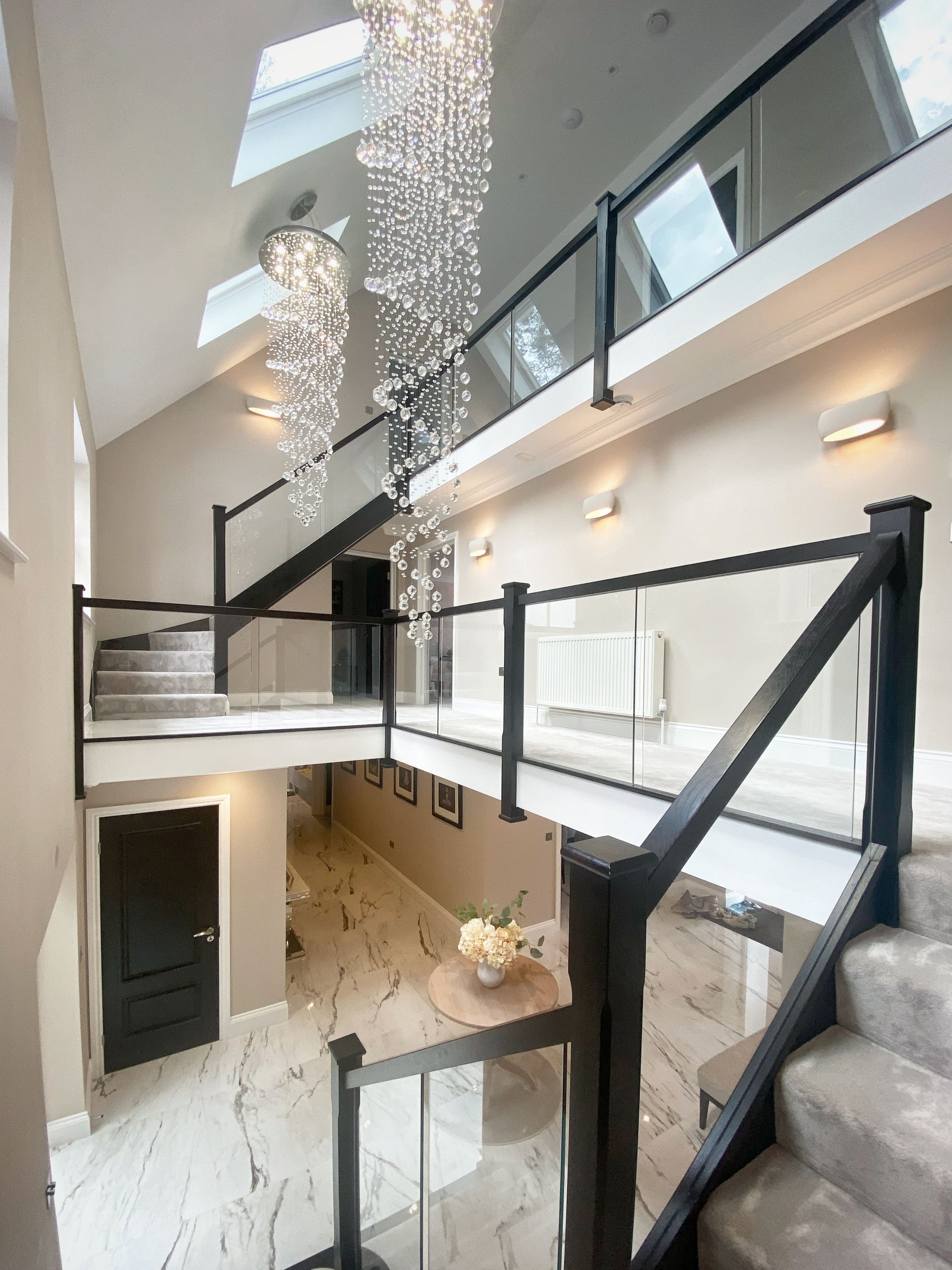
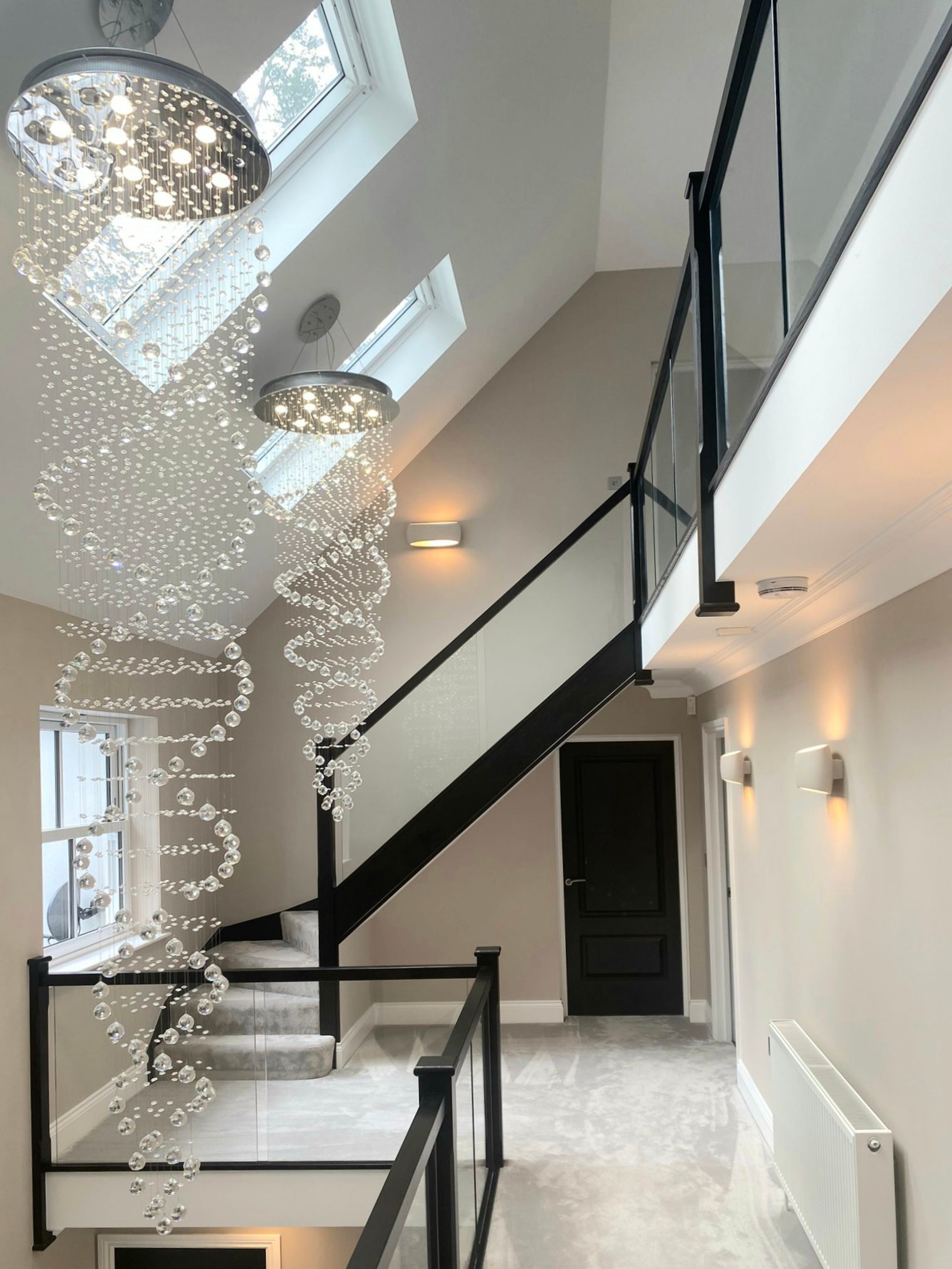
In this case you’re blown away by the quality of the space – the natural light that’s cascading down through the full height of the house through the bank of 3 large roof windows and the rear windows to the first floor, to the centre of a plan that’s 15m deep (that’s the length of a long articulated lorry), that can often be quite dark – definitely not in this case!
This is the kind of review of a house you might read in an estate agents’ literature. It perfectly describes the amazing architecture and spaces. What it doesn’t convey is the challenges that were overcome so that the project surpassed the client’s expectations.
With a brief to double the size of a house, it is a significant challenge to ensure that all the incidental spaces (such as hallways and staircases) are proportionate to the final, enlarged design and not just to end up with long, narrow corridors between bigger spaces tagged onto the existing house.
This is what many homeowners would do to avoid the need to demolish and re-arrange so much of the existing structure. We’ve written other blogs & articles about this Quantity or Quality? Usually, when a client is bold (and of course has the financial luxury to be bold) and is prepared to consider a holistic approach and revisit the masterplan, it is possible to achieve something outstanding. Then – rather than just the new spaces being outstanding – all of the existing spaces (and the house as a whole will be outstanding. This includes the incidental spaces, which can shine and ensure wherever you are in the house that you have the same experience and joy and don’t ever feel that you’re in a part that has been forgotten.
Whilst it’s very easy to try and justify a bold and destructive approach that leads to more significant construction costs – the good architect will take a step back and review the initial proposals to see if there are ways of achieving the great and bold design but retaining as much as possible of the existing structure – that’s clever design and ensures that there is a practical balance between budget and design, and the client’s purse is not seen as an easy way of achieving big, bright and beautiful spaces by being lazy.
The wows don’t stop there…
The fine marble floor throughout, the sleek contemporary kitchen,
dining & family space to the rear, again with no shortage of natural light from the roof lanterns in this space and the full height
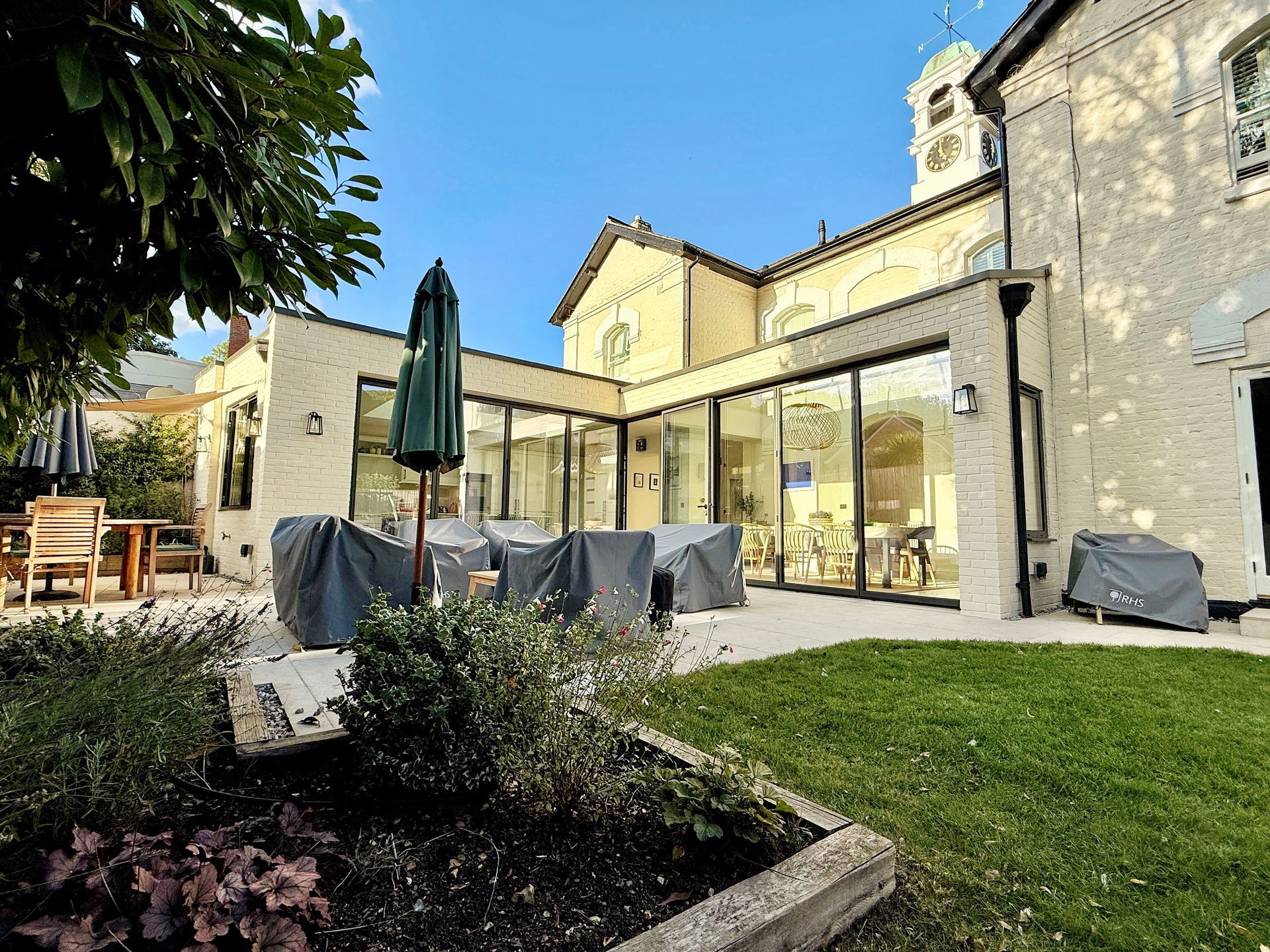
– full width sliding doors to the rear, overlooking a generous patio and green lawn surrounded by mature trees.
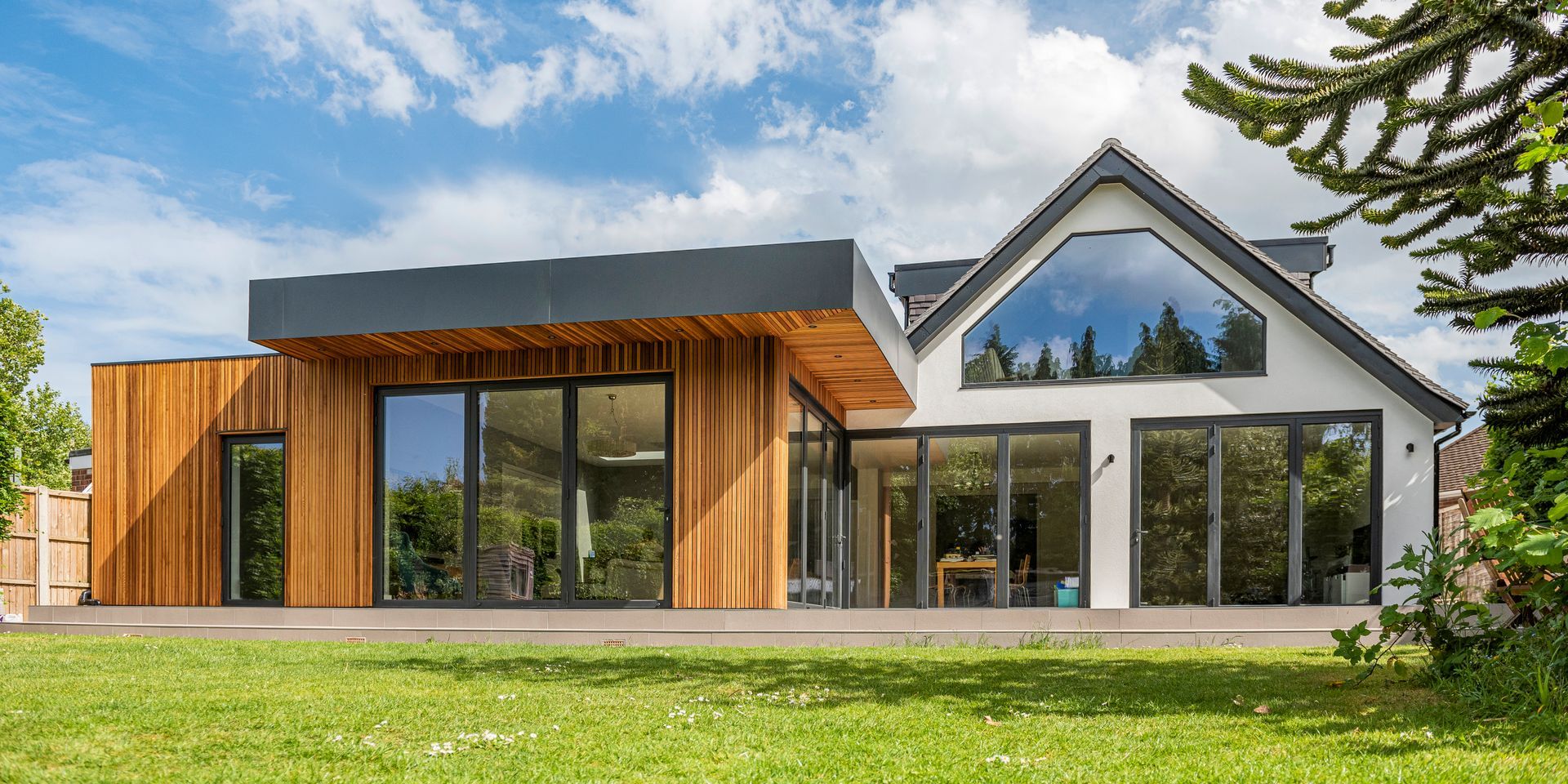
From the rear the house and the single storey extension are subtle and refined,
giving the owners all the space (and light) they could ever want but without the house feeling unhomely
– on the contrary, to their credit the property feels calm and welcoming.
The end results are beautifully and enthusiastically described in italics above but critically, it is having faith in the carefully considered process of establishing a brief and constantly challenging and reworking it, which leads the designs to that point.
The clients were a delight to work with and as with others that have had faith in bold decisions have been equally delighted with the results.
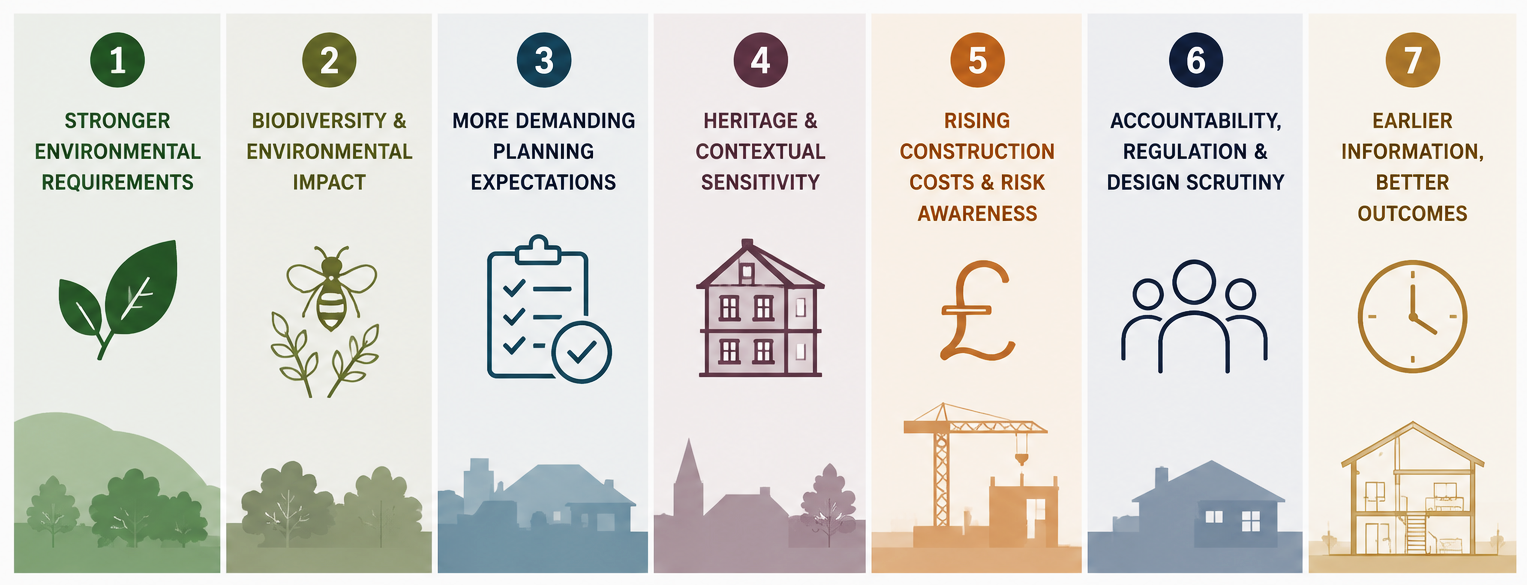
Why Residential Architecture Has Become More Complex in 2026
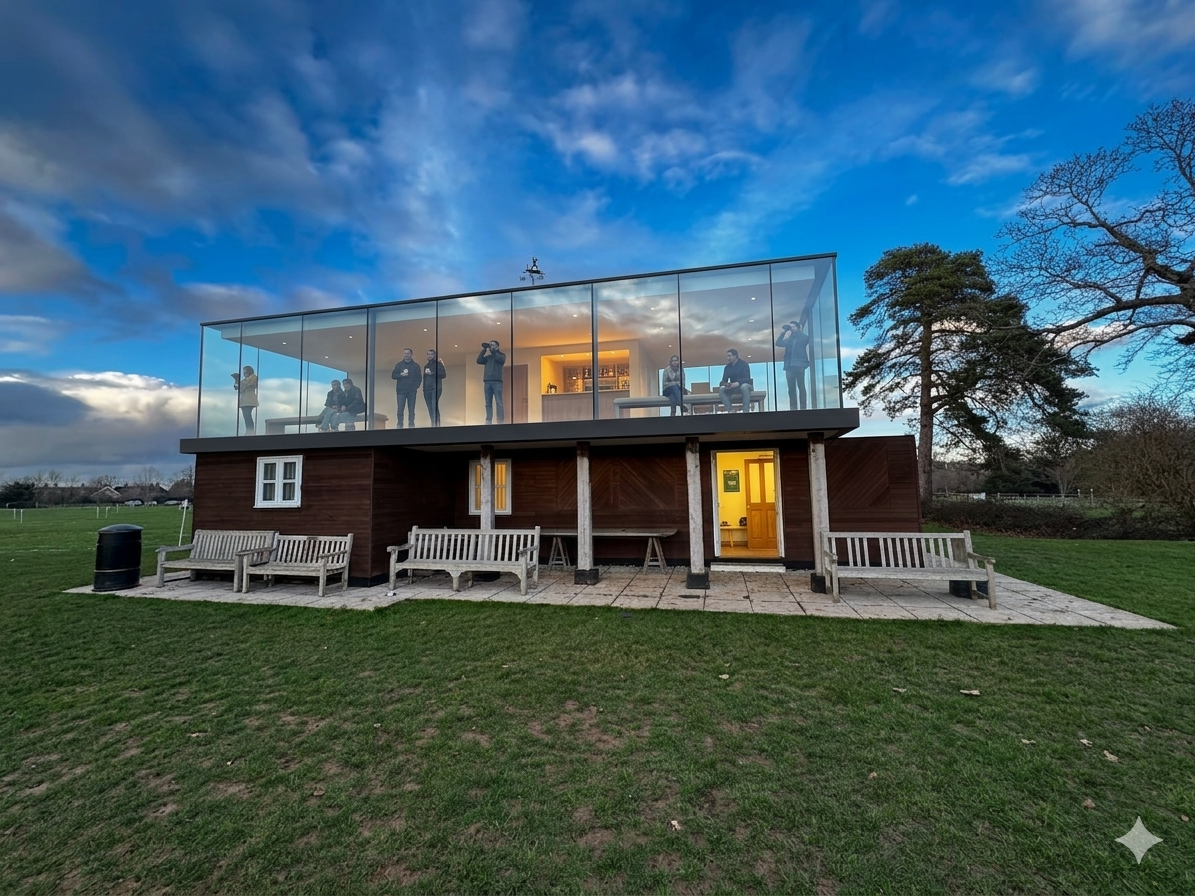
Images: all ai-generated from our School Pavilion project
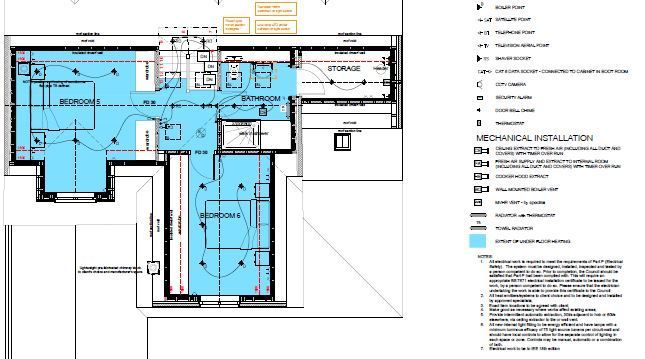
At Artichoke, we don’t push our services and for some projects, Building Regulations information is enough, where the client has both experience and a competent builder. Sadly, sometimes we get that call from a client after things have gone wrong. Recently, a lovely client of ours generously agreed to share her experience of undertaking a “relatively simple” extension without: • Detailed production drawings • A formal tender process • A proper building contract • An architect acting as Contract Administrator Her story isn’t about blaming anyone. It’s about process - and why it matters. Q&A Q: What made you decide not to appoint an architect to manage the build? Client: We felt it was a straightforward project — kitchen extension, some internal changes. We thought we could save money by not having full architectural drawings or someone overseeing the build weekly. The builder seemed confident and experienced and had been recommended. Looking back, we underestimated how complex even a “simple” project becomes once work starts and just how many things there are to actually tie up. Q: When did you first feel something wasn’t quite right? Client: Delays started early. Windows were months late. The skylight was boarded over for weeks. The house was insecure at times. But what really concerned us was when we started reviewing the finish — we realised it wasn’t just snagging. There were things unfinished, incorrectly installed, or potentially unsafe. Q: What kinds of issues arose? Client: There were dozens: • Appliances not secured properly • Sink only held in place with silicone • Hob extracting into a cabinet and wall cavity • Boiler flue incorrectly fitted • Faulty air admittance valve (not compliant with Building Regulations) • Cladding not finished properly • Drainage incomplete • Roof drain missing • Skylight not installed There were also safety and security concerns — the house left open, heating turned off without notice, keys left accessible. What we thought would be a short snagging list became a long schedule of incomplete and unacceptable work. Where Process Would Have Helped 1. Detailed Production Information Without full construction drawings: • Appliance housing dimensions weren’t properly coordinated • Extract ventilation routes weren’t clearly defined • Drainage details weren’t fully resolved • Cladding interfaces lacked clarity • Boiler clearances weren’t formally checked Production drawings remove ambiguity. They define responsibility. They reduce interpretation on site. When drawings are light, site decisions fill the gap – and those decisions aren’t always coordinated – or compliant.
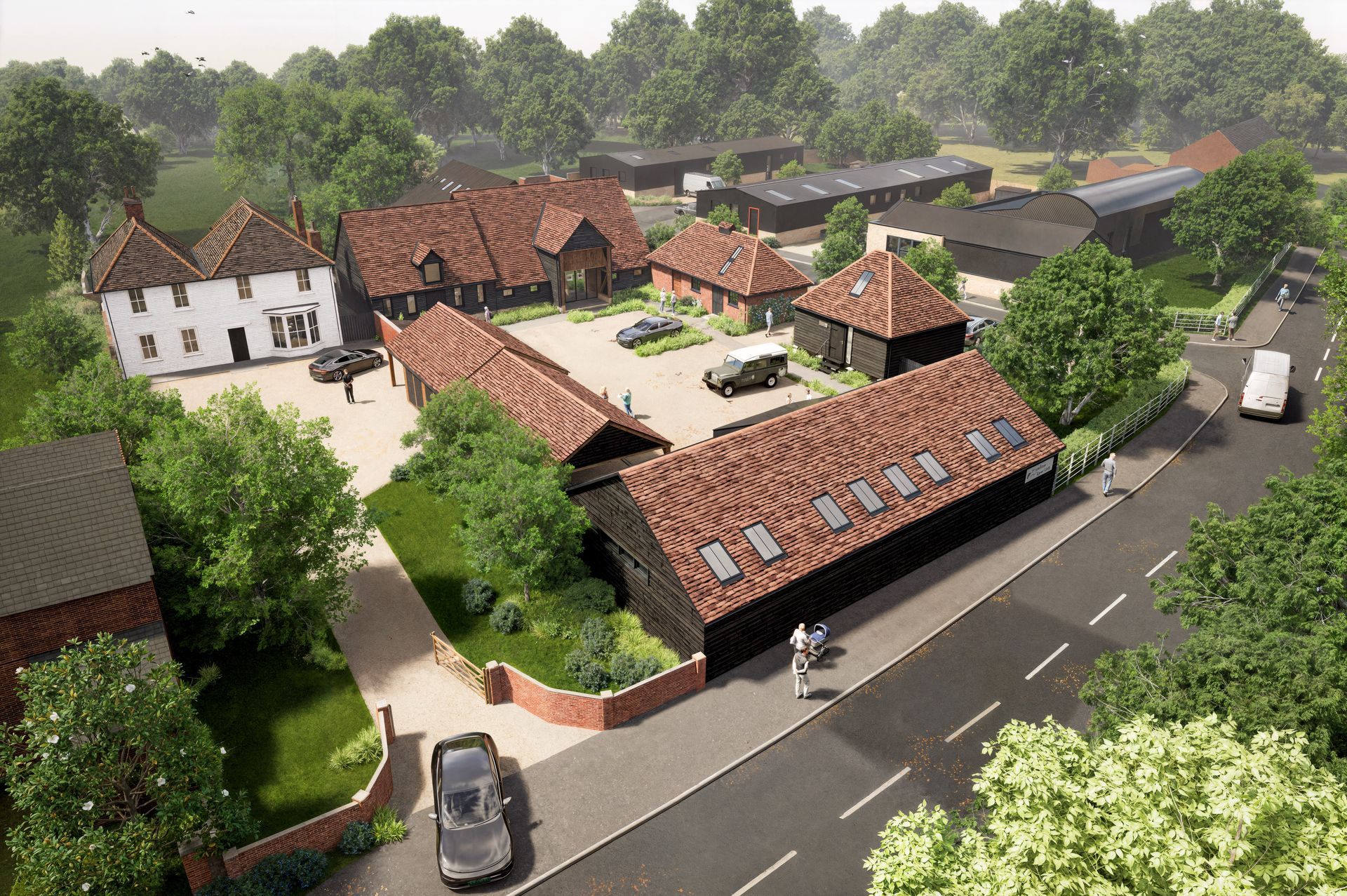
This marks a huge milestone in what has been one of the most exciting, challenging, and rewarding projects our practice has ever worked on. An Opportunity and a Privilege When we were first approached by Step Property almost five years ago, it was immediately clear that Manor Farm was a once-in-a-career project — a historic farmstead with five Grade II listed buildings, a sensitive Conservation Area setting, Green Belt & flood plain constraints, a struggling commercial yard and collapsing historic buildings that all urgently needed a coherent long-term vision and a strategy to achieve that. To be entrusted with leading the design and coordination of such a significant site has been a genuine privilege, one which we have not taken lightly.
Across the UK, many homeowners and small developers are pausing their plans. Construction costs are at record highs, planning requirements have become more complex, and professional fees are also increasing, so even a seemingly simple home extension or redevelopment is much more of a risk. Possibly the greatest concern we hear is – “What if we spend thousands of pounds only to find out it’s not even possible?” That’s exactly why we created the Kickstarter Package — our fixed-fee feasibility study that helps you to make informed decisions at a nominal cost in comparison to house purchases and developments. What is the Kickstarter Package? The Kickstarter Package is a design-led feasibility consultation that explores the planning, budget and design potential of your property. For a modest, fixed fee (from £750 excl. VAT), our experienced architects help you understand whether your ideas are likely to be achievable, affordable, and aligned with current planning policy — saving time, stress and money later on. You’ll receive clear answers to the key questions every homeowner faces: Is planning permission likely to be granted? What might the project cost? How long could it take? What could it look like? What’s Included — and Why It Matters Each element of the Kickstarter Package offers exceptional value compared with typical early-stage architectural or consultant fees. 1. Initial Consultation and Site Visit We start with a detailed discussion about your goals & requirements — from extending your home to redeveloping a site or purchasing a property. Then we visit the site to review opportunities and constraints in person. This early visit often uncovers crucial planning, drainage or design issues before you spend thousands on detailed drawings.
For many families, extending or renovating their home has long been the dream solution — more space, a better layout, and a home that works for modern life. But in today’s climate, with projects in the £100,000–£300,000 range, things feel a lot more challenging. So what’s changed, why is it harder, and how can you still make your project work? The Main Challenges • Planning is getting pricier – application fees are higher, and councils are demanding more specialist reports (heritage, ecology, flood risk, transport, sustainability). • Build costs keep rising – materials and labour are much more expensive than even a few years ago. • Tougher regulations – stricter building rules on energy efficiency, fire safety and accessibility add extra costs. • Financing is harder – borrowing is still more expensive than it was pre-2022. • Trades are stretched – good builders and subcontractors are in high demand, pushing prices and timescales up. • Delays and uncertainty – planning decisions are taking longer, especially in sensitive areas like the Green Belt, Conservation Areas or with listed buildings. • Budgets are squeezed – with the cost of living rising, homeowners are weighing up whether extending or simply moving makes more sense.